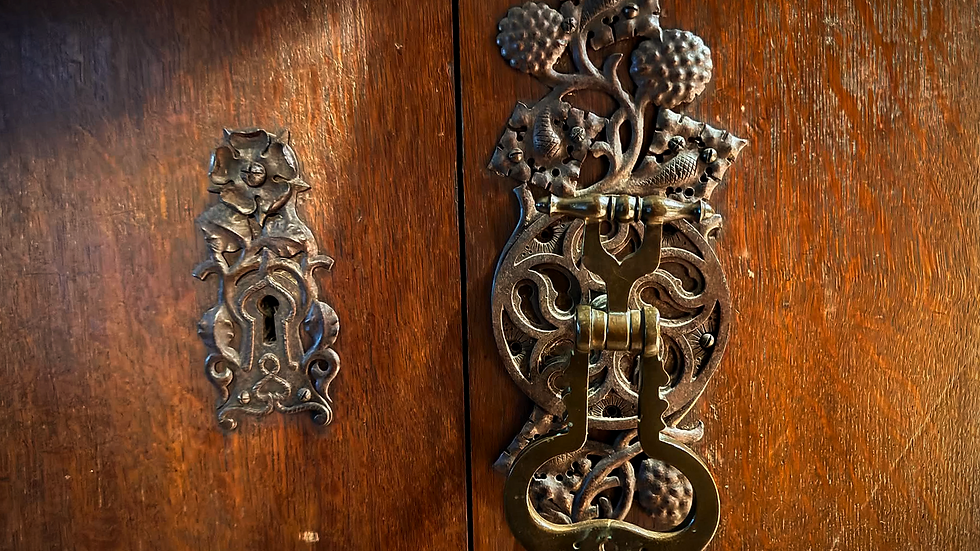
Behind the Historic Manor Door: Daily Life in a Tudor Household
- Lucy James
- 11 hours ago
- 3 min read

The gentle crackle of an open fire in the Great Hall, the sound of pots and pans clattering in the nearby Elizabethan kitchen and the distant echoing of footsteps hurrying up and down narrow winding staircases - it is easy to imagine what daily life may have been like for our Tudor forebearers at Athelhampton House. One of England’s finest Tudor historic houses if you prefer, Athelhampton boasts many original features including an impressive half hammer beam roof, beautiful oriel windows and the original front door through which members of the Martyn family and their esteemed guests would have entered.
It was Sir William Martyn, a member of the landed gentry, who commissioned construction of the Tudor manor in 1485 after receiving a royal license from the newly crowned King Henry VII to fortify the manor and crenelate its walls. Martyn was also among the retinue of men who escorted a young Catherine of Aragon to meet her betrothed, Arthur, Prince of Wales following her arrival at Plymouth after a treacherous journey across the sea from her native Spain.
Whilst the Martyn family were clearly a well-connected family on the rise with wealth and power at their disposal, it was Athelhampton that continued to play a leading role in their story. The house served as a backdrop for the everyday events that filled their domestic world from entertaining guests to managing the household, hosting grand feasts and participating in daily religious observance.
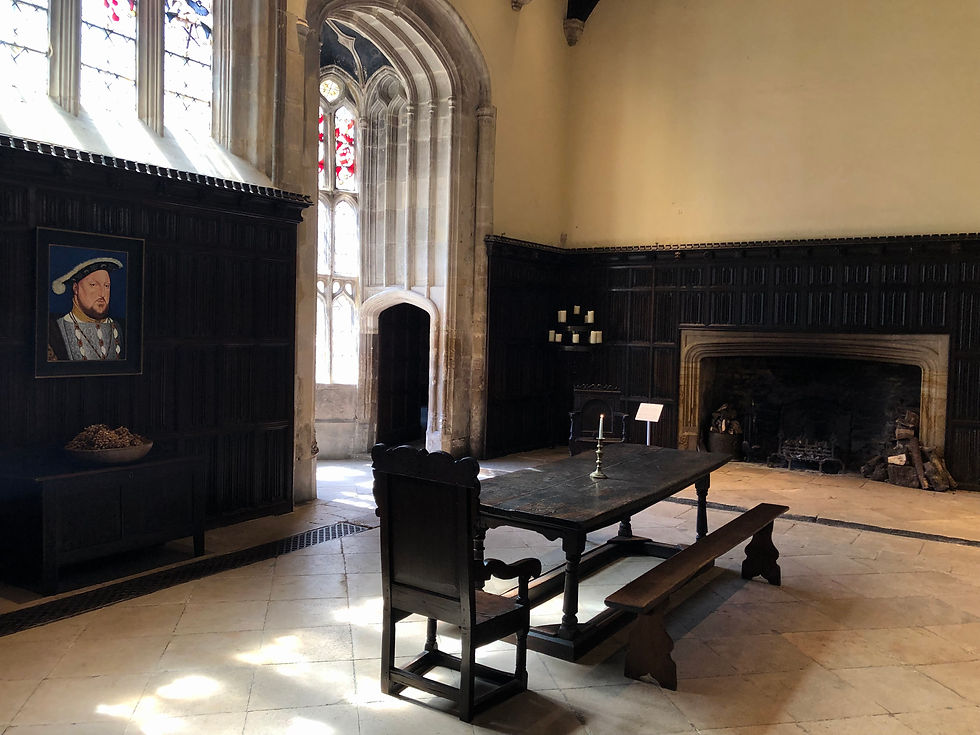
Guests visiting Athelhampton House today will be greeted at the front entrance before being shown through to the magnificent Tudor Great Hall. For Sir William Martyn and his descendants, this room served as a multifunctional space designed for eating, drinking, socialising, dancing and keeping warm by the fire. Banquets would have been held here where a spectacular blend of food, wine and music were designed not only to entertain guests, but also to demonstrate the wealth and power of the Martyn family. The room would have been aglow with candlelight, casting shadows across magnificent tapestries which likely lined the walls as the lord of the manor, his family and guests took their seats at the high table. Simultaneously, musicians seated in the minstrels’ gallery would have struck up into a chorus of joyful music suitable for such an occasion, as the fire crackled cheerfully in the background and serving staff brought in the first course.
The life of a servant in a Tudor household is encapsulated by Athelhampton’s Elizabethan kitchen. Built in 1560, this impressive room was the location within which cooking staff toiled for long hours in blistering temperatures preparing meals. An impressive fireplace dominates the space along with a bread oven built into its back wall, using the extreme heat for the baking of bread and pastries. A servant’s day began before dawn and ended long after dark. The hours in between were spent laying the fire, fetching water, cooking, cleaning and tending to a never ending list of other essential tasks. There was little time for idleness: life for a Tudor servant was tough. Rest finally came after the last candle had been extinguished, with staff drifting off to sleep on straw mattresses.

Upstairs, the Martyn’s sleeping arrangements were much more refined. The Marriage Chamber is a beautiful example of what the family’s accommodation may have looked like and contains wonderful examples of sixteenth century furniture. An elegant Elizabethan tester bed dominates the space with bed curtains designed to keep out the draft. On the far side of the room is an imposing fireplace made of ham stone and features a Tudor Rose. The oldest fireplace in Dorset, it has provided warmth and comfort to many generations of this successful Dorset family.

Such was the rhythm of daily life in a Tudor household. Athelhampton is the last surviving witness to the life and times of the Martyn family whose legacy perinates its walls. From the noble Great Hall built by Sir William Martyn to the bustling Elizabethan kitchen that sustained his family for generations, life behind the manor door was characterised by the gulf between the upper and lower ranks within the household. Today, Athelhampton provides visitors with a glimpse into the daily life of all those who called this remarkable house home.
Athelhampton House and Gardens are open throughout the year, excluding a few days over the Christmas period. You can learn more about life at this unique sixteenth century manor during our annual Tudor Week. Full details can be found on in our events page on the our website