
Rebellion and Usurpation at Athelhampton House & Gardens
On this day in 1685, the King James II had been on the throne for four months and five days. After the chaos and bloodshed of the Civil War, England wanted to try to stick to having a hereditary monarchy again, and not interrupt the line of succession. James had inherited the throne from his brother Charles, who had had plenty of children - the problem being that none of them were legitimate.

However, there was a bit of a problem with James II. He was Catholic. In many people's minds, this was dangerous: Louis XIV, the Catholic king next door in France was an "absolute" monarch. In other words, he ruled without a parliament providing checks and balances, and could essentially do what he liked. Charles I made various moves towards "absolute" monarchy during his reign - going for over a decade without calling Parliament - and this was part of what caused the Civil War. And we didn't want a re-run of that.

One of Charles II's illegitimate children, the Duke of Monmouth, began preparations to overthrow his uncle.
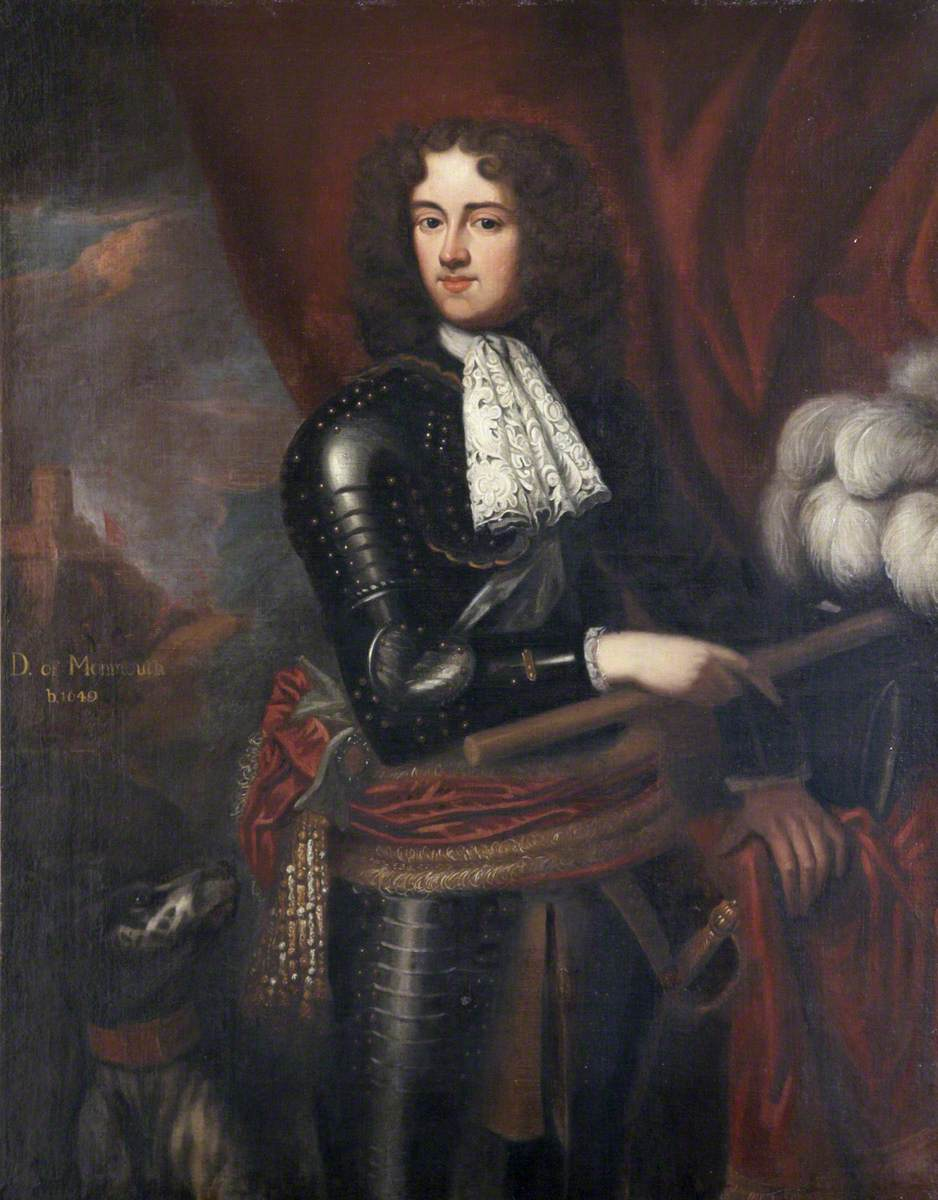
He'd been exiled overseas for an alleged plot to assassinate both his father and uncle so he could take the throne. He, his wife, and his mother in law pawned all their belongings to fund a ship and armed men, and Monmouth landed in Lyme Regis on this day in 1685.

Surrounded by popular support, his rebellion could theoretically have swept up through the South West towards London, and Monmouth might have replaced James II. He had coordinated with another rebellion in Scotland, so James II would have to fight on two fronts,

On his first day in Lyme Regis, Monmouth managed to gather 300 people in support, while the Mayor raised the local militia to try to deal with the rebels, and two customs officers rode for London to warn the King. While the King raised an army, Monmouth managed to gather more than 1000 people to his cause.

However, in this time, Monmouth also managed to lose his two leading supporters, when one of them shot the other in a dispute over who was to have the best horse. With one dead, and the other arrested, Monmouth's forces became increasingly disorganised. 400 men and 40 cavalry met defeat against the local militia of 1200 men in Bridport, but after Monmouth's men retreated, many of the militia men deserted to join the rebels.

Despite initial victories, including taking Bridgewater Castle, and being crowned at Taunton, Monmouth made various mistakes, moving too slowly to take Bristol, the largest and most important city in England after London. With the failure of the rebellion in Scotland, the morale of the rebels collapsed, and as local militias, the Royalist army, and mercenaries sent by William of Orange all closed in as the rebels retreated to Wells.
Using the lead from Wells Cathedral roof to make bullets, and stabling their horses in the nave, the rebels couldn't stay there for long before being pushed back further to Bridgwater again. With an force of 2000 Royalists nearby, Monmouth planned a night time attack, but this involved taking ill-trained troops unfamiliar with the terrain across a moor laced with dangerous rhynes, or drainage ditches. They managed to startle a Royalist patrol, and at the ensuing Battle of Sedgemoor, the regular forces managed to cut through the untrained rebels easily with cannon and musket fire.

The overall casualties throughout the rebellion saw 200 Royalists killed or wounded, in comparison to the 1300 rebels killed or wounded. Another 2700 rebels were captured.

Monmouth escaped after the final battle, but was captured in a ditch on the 8th of July, nearly a month after he had first landed back in England. He was sentenced to death as a traitor, and beheaded.
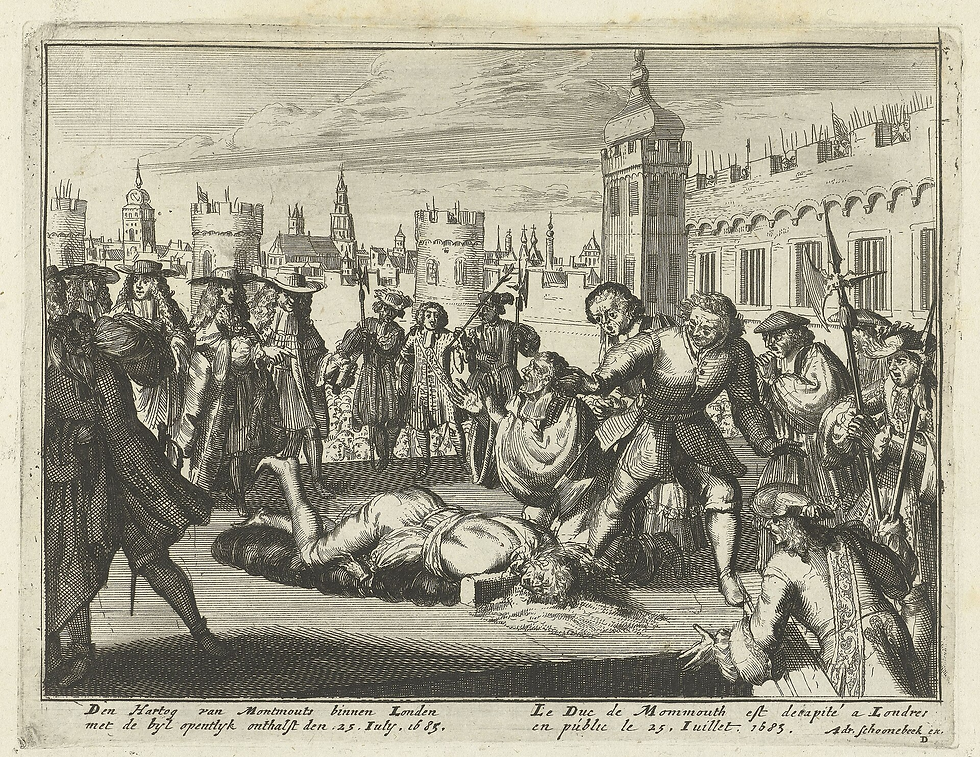
Judge Jeffries, meanwhile, held his Bloody Assizes, travelling around the West Country and sentencing Monmouth's supporters - 320 to death, and another 800 to transport to the West Indies and hard labour.

But what does this all have to do with Athelhampton?
The rebellion served to consolidate James II's rule, but only for a few years. He was meant to just be a little blip on the (mostly) Protestant line of succession, with the next to inherit the throne being his daughter Mary. But after only a few months, with James's wife pregnant, people were worried. A meeting took place on the staircase here at Athelhampton, in our West Wing, to discuss the potential of inviting Mary, James's daughter, and her husband William of Orange over to take the throne instead, ensuring a Protestant line of succession.

This culminated in the Glorious Revolution, so called because no one was killed. Mary took the throne (her aunt living here, at Athelhampton), along side her husband. In 1701, the Act of Settlement was passed to ensure no more Catholics took the throne: anyone who was Catholic or converted to Catholicism was deemed "dead" in terms of the line of succession.
Athelhampton House & Gardens are open 7 days a week, all year round (save a few days at Christmas), and you can come and see the staircase and landing on which the plot took place, complete with a chair created that very same year.


